As the war in Ukraine consumes Russia’s resources and isolates it diplomatically, Moscow has quietly expanded its reach in Africa and the Middle East. Through hybrid deployments, arms-for-resources deals, and a growing network of military bases, Russia seeks to secure influence, project power, and carve out a role in the emerging multipolar order. Yet Russia is not alone. The UAE and China are reshaping the same regions through financial power and infrastructural dominance, and together these parallel strategies point to a profound shift in the patterns of global influence.
A second front for Russian power
Since the launch of its full-scale invasion of Ukraine in 2022, Russia has largely been portrayed in Western discourse as a besieged and weakened power, a state whose horizons have narrowed to the trenches of Donbas and the sanctions imposed by the US and its allies. This framing, while understandable, misses a crucial dimension of Moscow’s global strategy. Even as its forces fight in Ukraine, the Kremlin has methodically invested in a quieter project across Africa and the Middle East. By leveraging modest military deployments, private security proxies, arms-for-access deals, and transactional diplomacy with fragile regimes, Moscow has sought to carve out a sustainable second front of influence. This strategy is not simply opportunistic. It reflects a core conviction among Russian elites that great-power status cannot be secured by European or Asian politics alone.
Moscow relies on patterns deeply rooted in its past. During the Cold War, the Soviet Union cultivated extensive alliances in Africa and the Arab world, presenting itself as the champion of anti-colonial movements and post-colonial regimes. Soviet pilots flew Egyptian MiG-21s in combat during the War of Attrition in 1970, Soviet advisors trained Angolan troops, and Soviet ports operated in Aden and Berbera. Today’s Russia lacks communism’s ideological export, but it has revived many of the same methods. Military assistance and arms exports buy access to minerals and basing rights, while security-for-resources exchanges allow Moscow to sustain overseas ventures without draining its treasury. What makes the present moment distinctive is not just Moscow’s reliance on hybrid force, but the shock created by the fall of the Assad regime in 2024. For more than a decade, Syria provided an anchor for Russia’s Middle Eastern presence. The loss of that anchor compelled Russian strategists to accelerate diversification, shifting their focus to new naval facilities in the Red Sea and new partnerships with regimes in the Sahel. Rather than withdrawing entirely, Moscow has sought to maintain a presence at Tartus and Khmeimim through transactional arrangements with Syria’s new authorities. This fragile footing has in turn driven a more aggressive pursuit of alternative bases in Sudan and Eritrea, where Moscow hopes to secure long-term maritime depth. In January 2025, Moscow signed a 25-year agreement granting access to Port Sudan for up to four vessels, including nuclear-powered ships. The deal promises strategic access to the Suez–Indian Ocean corridor but remains hostage to Sudan’s volatile politics. By contrast, Eritrea has offered more stable ground. In 2024 Asmara formalised its support for a permanent Russian base in Massawa, signalling Moscow’s intent to secure a foothold on the Red Sea that is less vulnerable to regime change. Together these efforts underscore how the loss of Syria has forced Russia to diversify aggressively, even if the sustainability of such ventures remains uncertain.
In doing so, Moscow has demonstrated its adaptability, showing that even when stripped of its strongest ally it has managed to reposition itself in ways that preserve long-term influence. However, Russia is not the only actor reshaping these regions. At the same time as Moscow has expanded its military footprint, Emirati companies have poured over $110 billion into African ports, mines, and energy projects since 2019. Emirati companies such as DP World, backed by ruling families in Dubai and Abu Dhabi, have acquired control of strategic corridors from Berbera in Somaliland to Mopani copper mines in Zambia. Where Moscow secures access through mercenaries and arms deals, Abu Dhabi relies on capital, logistics, and financial muscle. Its method is different, but the outcome is similar, giving it leverage over fragile governments and a long-term say in the future of resource flows and maritime chokepoints.
China’s presence adds yet another layer. For three decades Beijing has entrenched itself as Africa’s largest trading partner, building highways in Kenya, ports in Djibouti, housing in Sudan, and even the African Union headquarters in Addis Ababa. Its presence dwarfs Russia’s in scale, extending from major infrastructure projects to consumer markets that saturate everyday life. Yet in recent years, Emirati investment has surged as China has pulled back somewhat, with Beijing recalibrating its engagement following debt crises in Africa and economic challenges at home. Unlike Russia’s coercive security-for-resources model, China’s strategy emphasises development and trade. But both approaches reduce Western leverage and tie African economies into non-Western spheres of influence. The result is that Africa and the Middle East are no longer arenas where Western states enjoy uncontested dominance. They have become arenas of multipolar competition, where Russia’s coercive methods, the UAE’s financial expansion, and China’s infrastructural dominance converge.
From Syria to Sudan: securing maritime depth
If the Red Sea offers Russia maritime depth, the Sahel provides terrestrial depth and, crucially, resources. For Moscow, securing influence on land has become the necessary counterpart to its naval ambitions. The two strategies are tightly connected, as ports and airfields enable flows of personnel and equipment, while mineral concessions finance the deployments that keep regimes loyal. In countries such as Mali, the Central African Republic (CAR), Burkina Faso, and Sudan, Russia has refined a model of influence built on hybrid force. The formula is straightforward, providing regime security and military assistance in exchange for access to resources and political loyalty. This reliance on hybrid deployments is not new. Since the annexation of Crimea in 2014, Russia has steadily expanded its use of PMCs, creating new units during major geopolitical crises such as the Syrian war and the full-scale invasion of Ukraine. The incorporation of Wagner veterans into the Africa Corps after 2023 represents not an anomaly but the continuation of a long-term strategy to outsource risk, deny attribution, and institutionalise paramilitary force as a core tool of Russian statecraft. Regular Russian troops are rarely present in large numbers, and instead the work is done by PMCs. The Africa Corps, established after the collapse of the Wagner Group and its absorption into Russia’s Ministry of Defense, has taken over the role of securing mines, guarding leaders, and suppressing insurgents. By embedding these units into fragile states, Moscow ensures that it gains not just gold but also long-term leverage over governments that struggle to survive without foreign protection.
This “security-for-resources” trade could be effective for both sides. For juntas in Bamako or Bangui, Russian fighters offer insurance against domestic rivals and jihadist insurgents. For Moscow, the arrangement generates billions in revenue streams that circumvent sanctions while creating strategic depth across the continent. In a sanctions environment where Western channels are blocked, gold shipments from Mali and its Sahel neighbours, much of which end up in UAE, provide Moscow with liquidity and a financial lifeline. Africa’s gold trade through UAE is valued at around $30 billion annually, with the Sahel alone contributing an estimated $15 billion, a stream in which Russian entities are increasingly embedded.
Yet the model is fragile. PMCs vary widely in quality, with some units consisting of veterans with battlefield experience while others are drawn from prisons and lack discipline. Their cohesion is often poor, and their supply lines vulnerable. In July 2024, Tuareg fighters ambushed a Wagner convoy alongside Malian troops near Tinzaouaten. The exact number of casualties is difficult to verify, but reports suggest around 84 Russian mercenaries and 47 Malian soldiers were killed. The attack is widely regarded as Wagner’s largest defeat on the African continent and is not an isolated incident. The fragility of this model is compounded by the fact that the Sahel has become the global epicentre of extremist violence and terrorism, with groups such as JNIM and ISGS on the rise and the region accounting for more than half of worldwide terrorism-related deaths in 2024. Such incidents expose the limits of Moscow’s ability to sustain influence when its strategy relies on expendable PMCs and volatile regimes. Dependency also breeds resentment. While ruling elites benefit from Russian protection, many local communities view Moscow’s presence as extractive, designed to siphon resources rather than provide stability.
Even so, the overall trajectory is unmistakable. Russia has constructed what amounts to a Sahelian corridor of influence, stretching from Libya through Sudan and into CAR and Mali. Libya has in many ways become the pivotal hub of this network. From ports like Tobruk and airbases such as al-Khadim and Brak al-Shatti, Russia has been able to reroute equipment from Syria, embed personnel alongside Haftar’s forces, and expand southward into the Sahel. This logistical depth allows Moscow to sustain deployments further inland while anchoring its presence on Libya’s Mediterranean coast. The corridor as a whole links maritime bases with mineral concessions and paramilitary deployments, creating a zone through which Moscow could project power from the Mediterranean into Sub-Saharan Africa, challenging Western presence and presenting itself as an alternative partner.
Sanctions, shadow fleets, and financial loopholes
The durability of Russia’s presence in the Sahel and the Red Sea raises a central question of how a state under unprecedented sanctions can sustain overseas ventures that require money, logistics, and diplomatic leverage. With over 20,000 restrictions imposed by the US and its partners, Russia is today the world’s most sanctioned country. On paper, such isolation should have crippled its ability to fund the deployment of PMCs, negotiate basing rights, or maintain shadow supply lines. Yet in practice, Moscow’s operations in Africa have not only persisted but expanded.
One explanation could lie in a combination of financial adaptability and external enablers. As discussed earlier in the context of the Sahelian gold trade, the Gulf—and particularly the UAE—has been central to this process. Rather than relying solely on domestic reserves, Moscow channels capital and resource revenues through UAE’s financial system, which offers both discretion and access to global markets. This arrangement transforms African resource flows outlined above into a financial lifeline that sustains Russia’s overseas ventures despite sanctions. This pattern illustrates how Russia’s hybrid operations and Emirati financial channels intersect, with mercenaries securing the resource flows and Gulf-based institutions recycling the proceeds into usable capital.
The Emirati role, however, could go beyond facilitation. As noted earlier, Emirati companies have channelled more than $110 billion into African economies since 2019, dwarfing Western commitments, with projects ranging from ports in Somaliland and Senegal to renewable energy in Burkina Faso and Egypt, as well as a billion-dollar stake in Zambia’s Mopani copper mines. Although not designed to benefit Moscow directly, this vast web of Emirati investments contributes to an ecosystem in which non-Western capital, logistics, and political influence create alternatives to Western oversight. For Russia, this means a friendlier operating environment in which sanctions are easier to circumvent.
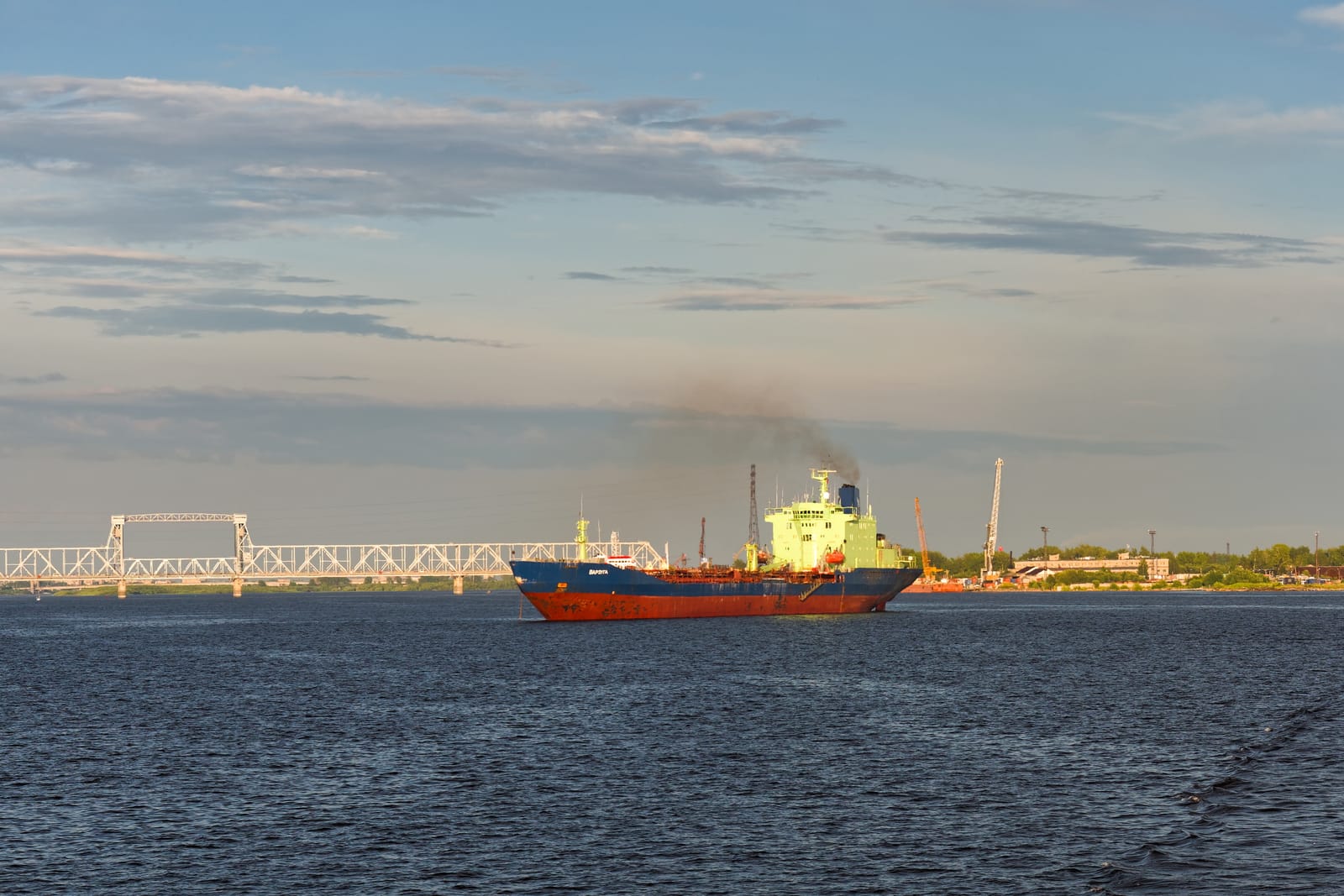
Maritime networks further illustrate this resilience. Russia has relied heavily on so-called “shadow fleets” of tankers and cargo vessels, often registered under flags of convenience, operated by front companies, and shifted between jurisdictions to obscure ownership. These vessels transport sanctioned oil and arms, enabling Moscow to sustain critical exports and supply routes. Extended sea lanes from the Baltic and the Arctic to Gibraltar and the Suez now carry Russian cargoes disguised through flag switching, ship-to-ship transfers, and falsified manifests. One prominent example is the so-called “Syrian Express,” Russia’s long-standing supply route to Syria, which after 2022 was forced to shift from the Bosporus to extended maritime corridors via Gibraltar. Another illustration came in 2025, when tankers registered under Gabon’s flag were documented carrying sanctioned Russian oil through Arctic waters. Both cases underscore how Moscow combines opportunistic routing with permissive registries to sustain trade under sanctions. This reliance on permissive registries has fuelled a surge in “flag hopping,” which peaked in 2025 as Russian vessels repeatedly re-registered under new jurisdictions to avoid scrutiny, exposing systemic gaps in global maritime governance. Such tactics mirror the improvisational logic of Russia’s hybrid operations on land, aiming to deny attribution, obscure responsibility, and keep revenues flowing.
Combined with PMC resource revenues, these maritime and financial loopholes ensure that Moscow can sustain ventures abroad even as its domestic economy contracts. Sanctions undoubtedly raise costs by forcing Russia to pay higher premiums, rely on less transparent intermediaries, and tolerate corruption, but they have not curtailed strategic intent. On the contrary, they have deepened Russia’s reliance on partners who have little interest in enforcing Western rules.
The risks of overreach
Russia’s ventures in Africa and the Middle East are not signs of limitless reach, but of a power willing to gamble on fragile arrangements abroad to offset weakness at home. If the war in Ukraine continues to drain resources, Moscow may be forced to consolidate rather than expand, relying on propaganda, proxies, and transactional deals to preserve a minimal footprint. If sanctions ease or the defence industry stabilises, it could scale up, redeploy surplus assets, and accelerate basing along the Red Sea. Either way, the objectives remain constant, to secure access to resources, undermine Western influence, and demonstrate relevance as a global power, and as discussed, Russia is not acting alone. Together, these efforts are reshaping Africa and the Middle East into arenas where Western power is contested, circumvented, and in some cases replaced.
For Western policymakers, the lesson is stark. Africa and the Middle East are no longer “peripheral” theatres. They are arenas of multipolar competition, where Russia, China, and the UAE together with other Gulf monarchies build alternative networks of power. If ignored, these regions may become the platforms from which Moscow and its partners reassert themselves long after the guns in Ukraine fall silent. They also sit at the crossroads of global trade routes, resource flows, and migration patterns, meaning that instability or rival influence there will reverberate directly into Europe’s security and prosperity.
Litteraturliste
Abdalla, Salma. “Emerging Stage for Great Power Competition: Russia’s Influence in Sudan amid Political Turmoil.” Security in Context. Accessed September 19, 2025. https://www.securityincontext.org/posts/emerging-stage-for-great-power-competition-russias-influence-in-sudan-amid-political-turmoil.
ACLED. “The Wagner Group and Africa Corps.” Armed Groups. ACLED. Accessed September 16, 2025. https://acleddata.com/armed-group/wagner-group-and-africa-corps.
Alade Najimdeen, Hakeem. “The GCC’s Strategic Footprint: Gulf Investment as an Emerging Power Bloc in Africa.” Al Jazeera Centre for Studies, June 26, 2025. https://studies.aljazeera.net/en/analyses/gccs-strategic-footprint-gulf-investment-emerging-power-bloc-africa.
Belhaj, Ferid. “Africa and the Middle East: The Shift from Geopolitics to Geoeconomics.” Policy Center, October 3, 2024. Accessed September 18, 2025. https://www.policycenter.ma/publications/africa-and-middle-east-shift-geopolitics-geoeconomics.
Caprile, Anna, and Gabija Leclerc. Russia’s “Shadow Fleet”: Bringing the Threat to Light. EPRS, European Parliamentary Research Service. PE 766.242. November 2024. https://www.europarl.europa.eu/RegData/etudes/BRIE/2024/766242/EPRS_BRI(2024)766242_EN.pdf.
Center for Preventive Action. “Violent Extremism in the Sahel.” Global Conflict Tracker, Council on Foreign Relations. Updated September 4, 2025. Accessed September 18, 2025. https://www.cfr.org/global-conflict-tracker/conflict/violent-extremism-sahel.
Cohen, Patricia. “U.A.E. Is Pouring Money Into Africa, Seeking Resources and Power.” The New York Times, May 17, 2025. Accessed September 17, 2025. https://www.nytimes.com/2025/05/17/business/uae-africa-finance.html.
Craw, Victoria. “Aging, Stealthy, Suspected of Sabotage: What to Know about Russia’s ‘Shadow Fleet.’” The Washington Post, May 20, 2025. Accessed September 17, 2025. https://www.washingtonpost.com/world/2025/05/20/russia-shadow-fleet-sanctions-baltic-sea/.
Diakun, Bridget. “Flag Hopping Hits Unprecedented Levels Among Sanctioned Fleet.” Lloyd’s List, April 25, 2025. Accessed September 16, 2025. https://www.lloydslist.com/LL1153276/Flag-hopping-hits-unprecedented-levels-among-sanctioned-fleet.
Faulkner, Christopher M., and Raphael Parens. “Russia in Africa: Private Military Proxies in the Sahel.” Georgetown Journal of International Affairs, March 24, 2025. Accessed September 16, 2025. https://gjia.georgetown.edu/2025/03/24/russia-in-africa-private-military-proxies-in-the-sahel/.
Ferragamo, Mariel. “Russia’s Growing Footprint in Africa.” Council on Foreign Relations. Updated December 28, 2023. Accessed September 19, 2025. https://www.cfr.org/backgrounder/russias-growing-footprint-africa.
Graham, Thomas. “What Assad’s Fall Means for Russia in the Middle East.” Council on Foreign Relations, December 10, 2024. Accessed September 18, 2025. https://www.cfr.org/expert-brief/what-assads-fall-means-russia-middle-east.
Kaushal, Sidharth, and Edward Black. “Russia’s Options for Naval Basing in the Mediterranean After Syria’s Tartus.” RUSI Commentary, January 14, 2025. Accessed September 17, 2025. https://www.rusi.org/explore-our-research/publications/commentary/russias-options-naval-basing-mediterranean-after-syrias-tartus.
McGlynn, Jade. “Russia’s Anti-Colonial Narrative Is Putin’s Diplomatic Strategy in Africa.” Foreign Policy, February 8, 2023. Accessed September 15, 2025. https://foreignpolicy.com/2023/02/08/russia-ukraine-colonialism-diplomacy-africa/.
Ndoricimpa, Arcade. “The Ugly Side of the Africa-UAE (United Arab Emirates) Gold Trade: Gold Export Misreporting and Smuggling.” Resources Policy 91 (April 2024): art. no. 104921. https://doi.org/10.1016/j.resourpol.2024.104921.
Notte, Hanna. “Russia Is Shrewdly Playing the Long Game in Africa.” War on the Rocks, September 17, 2025. Accessed September 19, 2025. https://warontherocks.com/2025/09/russia-is-shrewdly-playing-the-long-game-in-africa/.
Pronczuk, Monika, John Leicester, and Michael Biesecker. “Russia Skirts Western Sanctions to Ramp Up Its Military Footprint in Africa.” Associated Press, June 11, 2025. Accessed September 14, 2025. https://www.ap.org/news-highlights/spotlights/2025/russia-skirts-western-sanctions-to-ramp-up-its-military-footprint-in-africa/.
“Russia to Use Libyan Base Near Border with Chad, Sudan.” Africa Defense Forum, February 11, 2025. Accessed September 15, 2025. https://adf-magazine.com/2025/02/russia-to-use-libyan-base-near-border-with-chad-sudan/.
Saiz Erausquin, Gonzalo, and Tom Keatinge. Countering Shadow Fleet Activity through Flag State Reform. London: Royal United Services Institute, September 2, 2025. Accessed September 16, 2025. https://www.rusi.org/explore-our-research/publications/insights-papers/countering-shadow-fleet-activity-through-flag-state-reform.
Terren, Ludovic, Peter Van Aelst, and Thomas Van Damme. Shifting Alliances in West Africa: Measuring Russian Engagement to Support Counter-FIMI Strategies. EU Institute for Security Studies, Brief, February 7, 2025. Accessed September 17, 2025. https://www.iss.europa.eu/publications/briefs/shifting-alliances-west-africa-measuring-russian-engagement-support-counter.
Tovy, Tal. “The Struggle for Air Superiority: The Air War over the Middle East (1967–1982) as a Case Study.” Journal of European, Middle Eastern, & African Affairs 2, no. 1 (2020): 77–97. https://www.airuniversity.af.edu/Portals/10/JEMEAA/Journals/Volume-02_Issue-1/Tovy.pdf?utm.
Vakulenko, Sergey. “Russia’s Great Energy Game in the Middle East.” Carnegie Endowment for International Peace, November 12, 2024. https://carnegieendowment.org/research/2024/11/russias-great-energy-game-in-the-middle-east?lang=en
Vision of Humanity. “Sahel Dominates Top 10 Countries Most Impacted by Terrorism.” Vision of Humanity, March 4, 2025. Accessed September 18, 2025. https://www.visionofhumanity.org/sahel-dominates-top-10-countries-most-impacted-by-terrorism/.
Yordanov, Radoslav A. The Soviet Union and the Horn of Africa during the Cold War: Between Ideology and Pragmatism. Lanham, MD: Lexington Books, 2016.